Most homeowners never think about roof ventilation until something goes wrong — a stained ceiling, a spiking summer energy bill, or a contractor pointing out ice damming along the eaves. Roof ventilation is one of the most important systems protecting your home, and it works completely out of sight, tucked behind soffits and ridge caps.
In Maryland and Virginia, where summers bring thick humidity and winters swing from mild to bitterly cold, a poorly ventilated attic can shorten a roof’s lifespan by years and create moisture problems throughout the house. The good news is that ventilation issues almost always show warning signs before they turn into expensive repairs.
Here’s what to watch for, why the problem shows up so often in this region, and how Roofing Pups helps homeowners fix it.
What Roof Ventilation Actually Does
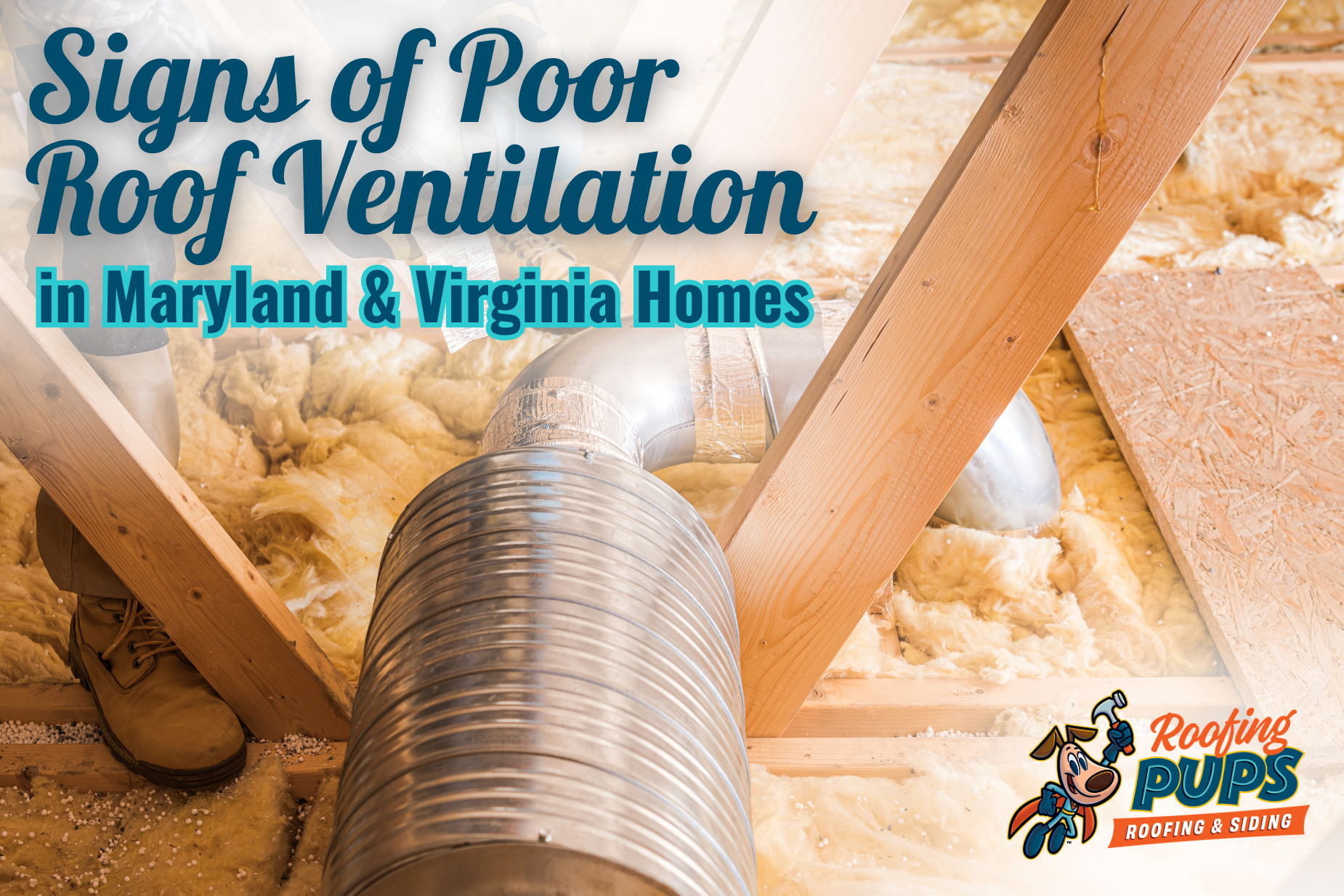
A properly functioning attic ventilation system works like a continuous air exchange. Vents built into the soffits pull cooler, drier air in at the lowest point of the attic, while vents at or near the ridge let hot, moist air escape at the highest point. That constant movement keeps attic temperatures closer to outdoor conditions instead of letting heat and humidity build up overhead.
When intake and exhaust are balanced, the attic stays dry in winter and doesn’t overheat in summer. When they’re not — because vents are blocked, undersized, or missing altogether — the effects show up in the living space below long before most homeowners think to check the attic.
Common Signs of Poor Roof Ventilation
Because the attic is rarely visited, the signs of poor roof ventilation usually surface somewhere else in the home first. Here are the ones worth paying attention to.
Ice Dams in Winter
When warm attic air escapes through insufficient insulation and gets trapped by poor airflow, it heats the underside of the roof deck unevenly. Snow melts near the ridge, runs down to the colder eaves, and refreezes into a dam that backs water up under the shingles. Ice dams are one of the clearest cold-weather signs that an attic isn’t venting the way it should.
Excess Attic Heat in Summer
Without enough exhaust at the ridge, attic temperatures in a Maryland or Virginia summer can climb well above outdoor levels. That heat radiates down into living spaces, forces air conditioning systems to work harder, and accelerates the breakdown of roofing materials from underneath.
Musty Odors or Visible Mold
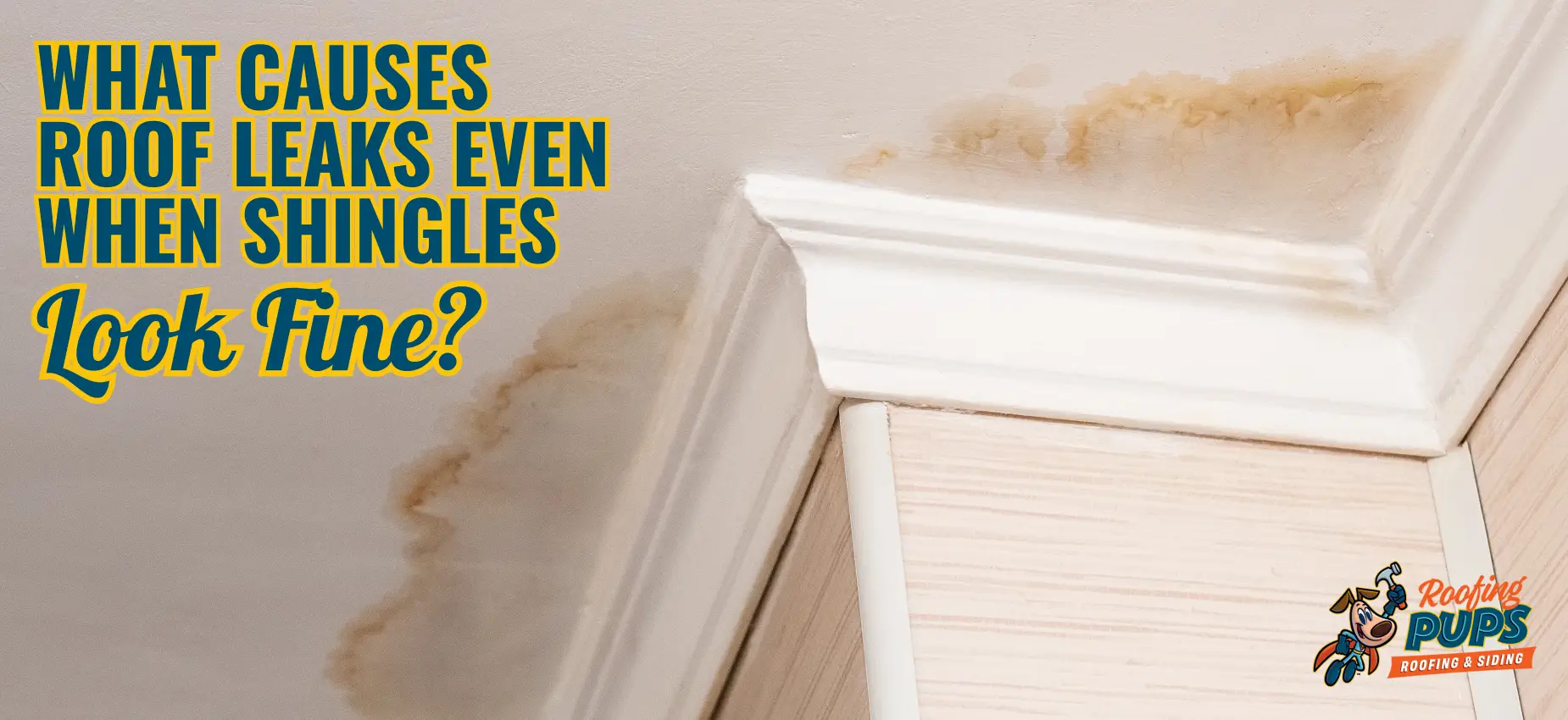
Trapped moisture doesn’t just cause wood rot in the attic — it eventually finds its way into insulation, drywall, and closets on the top floor. A persistent musty smell or visible mold near ceiling lines is often traced back to attic humidity that had nowhere to go.
Curling, Cracking, or Prematurely Aging Shingles
Heat and moisture trapped against the underside of the roof deck age shingles from below, long before they’d normally wear out from sun and weather exposure up top. If a roof is showing curling or cracking well ahead of its expected lifespan, ventilation is one of the first things worth ruling out — often alongside a closer look at shingle repair and installation to assess how much damage has already been done.
Unexplained Spikes in Energy Bills
An attic that traps summer heat forces the HVAC system to compensate, and a winter attic vulnerable to ice damming and moisture can undermine insulation performance. Homeowners who notice their energy costs climbing without an obvious cause often find the attic is the missing piece.
Why Ventilation Problems Show Up Often in Older MD & VA Homes
Ventilation problems tend to cluster in certain kinds of homes, and the region’s housing stock has plenty of them. Additions built without extending the original ventilation system, older homes re-roofed over the years without revisiting attic airflow, and houses with complex rooflines all create gaps where intake and exhaust don’t line up the way they should.
We see this pattern regularly across our service area — in the established neighborhoods of Ellicott City, MD, where many homes have gone through additions or renovations that outpaced the original attic design, and in communities throughout Howard County, MD and Baltimore County, MD with a similar mix of home ages.
On the Virginia side, homes across Fairfax County, VA and Montgomery County, MD often share the same story, and it’s a topic homeowners in Sterling, VA ask us about often enough that it’s become one of our more common inspection requests in that area.
Types of Roof Ventilation Systems
Most ventilation systems rely on a combination of intake and exhaust components working together. Getting the balance right matters more than any single part.
Ridge Vents
Installed along the peak of the roof, ridge vents run the length of the ridge line and provide continuous exhaust for hot, moist air. They’re low-profile, blend into most roof lines, and are typically the most efficient exhaust option for the pitched roofs common throughout Maryland and Virginia.
Soffit Vents
Soffit vents sit underneath the roof’s overhang and provide the intake half of the system. Without enough soffit airflow, even a well-installed ridge vent has nothing to pull from, and the whole system underperforms. Soffit and fascia condition go hand in hand here — damaged or painted-over vents can quietly choke off airflow for years, which is one reason we often check fascia and soffit condition during a ventilation inspection.
Attic Fans
Powered attic fans actively pull air through the attic rather than relying on natural convection. They can help in attics with limited passive ventilation options, though they work best as a supplement to — not a replacement for — proper ridge and soffit balance.
How Roofing Pups Diagnose Ventilation Issues
Ventilation problems are easy to misdiagnose because the symptoms show up everywhere except the attic. Our team starts with a full roof inspection, checking intake and exhaust venting, insulation condition, and any signs of moisture or heat damage to the roof deck and shingles from below.
If we find damage that’s already affected the shingles or decking, we’ll walk through roof repair options first. In cases where the roof is older or the damage is more extensive, a full roof replacement gives us the opportunity to correct ventilation problems at the source rather than patching around them. For homeowners planning a larger project, our financing options can help make that timing easier to manage.
Frequently Asked Questions About Winter Gutter Maintenance
What are the most common signs of poor roof ventilation?
The most common signs are ice dams in winter, excessively hot attics in summer, musty odors or visible mold near ceiling lines, shingles that curl or crack ahead of schedule, and energy bills that climb without an obvious cause. Any one of these on its own is worth a closer look, and several together usually point directly to a ventilation problem.
How does roof ventilation affect ice dams in winter?
Poor ventilation lets warm air collect near the roof deck, which melts snow unevenly and sends water down to the colder eaves, where it refreezes into a dam. Balanced intake and exhaust keep the entire roof deck closer to outdoor temperature, which reduces uneven melting and the ice dams that come with it.
Can poor attic ventilation void my shingle warranty?
Many shingle manufacturers require adequate attic ventilation as a condition of their warranty coverage, since excess heat and trapped moisture can cause shingles to fail well before their expected lifespan. Checking ventilation is a standard part of protecting that coverage, especially on a newer roof.
How many roof vents does my home actually need?
The right number depends on attic square footage, roof pitch, and the balance between intake and exhaust, which is why a proper ventilation calculation looks at the whole system rather than a fixed number. An inspection is the most reliable way to know whether an attic is under-vented, over-vented, or balanced correctly.
Do ridge vents and soffit vents need to be installed together?
Yes — ridge vents provide exhaust and soffit vents provide intake, and neither works well without the other. A ridge vent installed without matching soffit intake can actually pull conditioned air from the living space instead of the outdoors, which works against the goal of ventilation.
How much does adding or upgrading roof ventilation cost?
Cost depends on the type of ventilation needed, whether soffit vents need to be added or repaired, and whether the work is done on its own or alongside a larger roofing project. Roofing Pups provides a written estimate after an in-person inspection so homeowners know the full scope before any work begins.