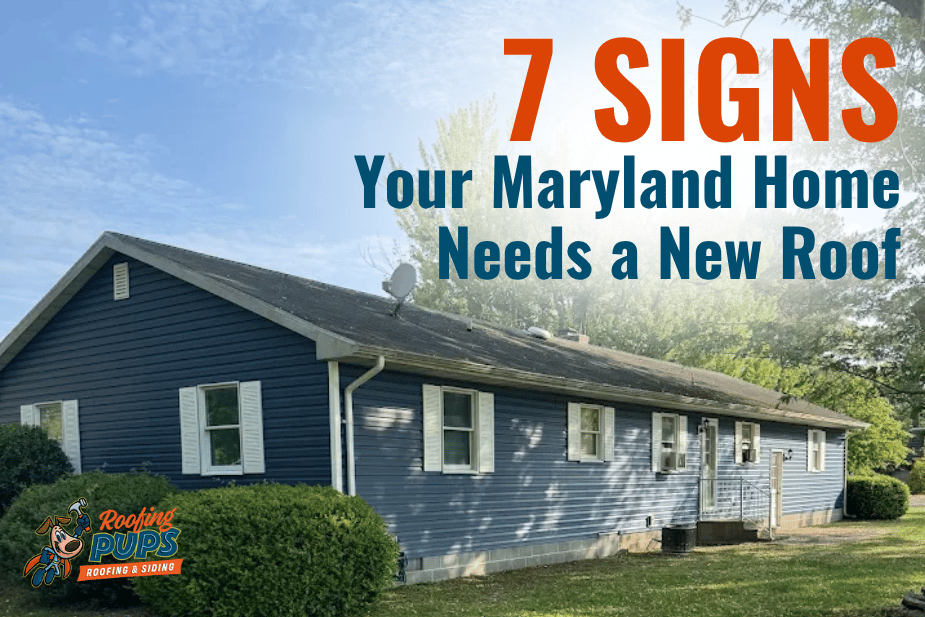
The most common signs you need a new roof are a roof that’s 20 or more years old, curling or missing shingles, granules in your gutters, attic leaks or daylight, a sagging roof deck, recurring moss and rot, and repair bills that keep stacking up. If your Maryland home shows two or more of these, it’s time for a professional assessment.
Maryland roofs work harder than most. Winters bring freeze-thaw cycles and ice dams, summers bring heavy humidity and heat, and nor’easters and the remnants of tropical storms can drive wind and rain under weakened shingles. Catching these warning signs early lets you plan a roof replacement on your own timeline instead of scrambling during an emergency.
How Long Does a Roof Last in Maryland?
Most asphalt shingle roofs in Maryland last 20 to 30 years. Three-tab shingles sit at the lower end of that range, while architectural shingles installed with proper ventilation and underlayment often reach 25 to 30 years. Metal and slate last considerably longer, but asphalt remains the most common choice for Maryland homes.
Real-world lifespan also depends on attic ventilation, installation quality, tree cover, and sun exposure. A south-facing slope that takes full summer sun will age faster than a shaded one, and a roof that stays damp under overhanging branches is more prone to algae and decay. Two roofs installed the same year on the same street can wear out years apart.
Sign #1: Your Roof Is 20 or More Years Old
If your roof is 20 years old or older, start planning for replacement even if it looks fine from the street. Shingles lose flexibility and sealant strength with age, which makes them more likely to lift, crack, or blow off in the next big storm.
Not sure how old your roof is? Check your home inspection report, closing documents, or permit records with your county. Starting early gives you time to compare materials and contractors without pressure. Our guide to the best roofing material for Maryland homes compares asphalt, metal, and other options for local weather.
Sign #2: Shingles Are Curling, Cracking, or Missing
Curling, cracking, or missing shingles are among the clearest signs of roof damage. Curling shingles that cup upward at the edges or claw downward in the middle have lost their ability to shed water properly.
In Maryland, freeze-thaw cycles speed this process up. Water seeps into small cracks, freezes overnight, and expands, widening the gap a little more each time. A few missing shingles after a windstorm can often be repaired, but widespread curling across multiple slopes usually means the roof has reached the end of its service life.
Sign #3: Granules Are Washing Into Your Gutters
Shingle granules collecting in your gutters or at the base of your downspouts mean your shingles are wearing out. Those granules shield the asphalt layer from UV rays, and once they’re gone, the shingles deteriorate quickly.
Some granule loss is normal during the first year after installation. Heavy buildup on an older roof, or bald patches where the dark asphalt shows through, is a different story. While you’re up on the ladder, look for sagging or overflowing gutters too, since clogged gutters can push water back under the roof edge. If they need attention, gutter repair is a simple fix that protects your roofline.
Sign #4: Water Stains, Leaks, or Daylight in the Attic
Water stains on ceilings, damp insulation, or daylight showing through the roof boards mean water is already getting inside. Grab a flashlight and check your attic after a heavy rain.
Look for dark streaks on rafters, wet or matted insulation, and a musty smell. In winter, ice dams are a frequent culprit in Maryland: snow melts on a warm upper roof, refreezes at the colder eaves, and backs water up under the shingles. One isolated leak around a vent or chimney flashing may be repairable, but multiple leak points usually point to a failing roof system.
Sign #5: The Roof Deck Is Sagging or Feels Soft
A sagging roofline or a deck that feels soft or spongy is a serious structural warning. It usually means moisture has weakened the plywood or OSB sheathing beneath the shingles.
Stand at the curb and look along the ridge line. It should be straight. Dips, waves, or low spots between rafters call for a professional assessment right away, because a compromised deck can’t hold fasteners securely and won’t support new shingles until the damaged sections are replaced. Don’t walk on a roof you suspect is sagging.
Sign #6: Moss, Algae, and Rot Keep Coming Back
Moss, algae, or rot that returns after cleaning signals that your roof is holding moisture it can no longer shed. Maryland’s humid summers, frequent rain, and tree-lined neighborhoods create ideal conditions for growth.
Black streaks are typically algae and are mostly cosmetic. Moss is different: it traps water against the shingles and lifts their edges. Soft, discolored, or crumbling wood along the eaves often means the decking or the fascia and soffit has started to rot. On a healthy roof, prevention goes a long way, and our tips on how to prevent moss and algae growth cover what works. On an aging roof, recurring growth is often a sign the materials themselves are failing.
Sign #7: Repairs Keep Piling Up After Every Storm
If you’re calling a roofer after every major storm, your roof is telling you it’s done. Patch after patch adds up, and on an older roof, each repair only buys a little time before the next weak spot gives out.
Add up what you’ve spent over the last few years. When repair costs start approaching a meaningful share of a replacement, or when fresh storm damage shows up after every nor’easter or summer thunderstorm, replacing the roof is often the more economical choice.
Roof Repair vs. Replacement: How to Decide
Repair your roof when damage is limited to a small area and the roof is relatively young. Replace it when damage is widespread, the roof is near the end of its lifespan, or the decking is compromised.
A targeted roof repair makes sense for a few missing shingles, a single flashing leak, or a cracked vent boot on a roof that’s 10 or 15 years old. Replacement is usually the better investment when you see several of the signs above at once, when the roof is more than 20 years old, or when moisture has reached the sheathing.
When to replace your roof also depends on your plans for the home. If you’re selling soon, a new roof can strengthen your listing and smooth the inspection process. If you’re staying long term, upgrading to GAF shingles with an enhanced manufacturer warranty adds protection for decades. If you’re comparing roof replacement Maryland contractors, ask about manufacturer certifications, workmanship warranties, and whether the crew handles permits and cleanup.
Schedule a Roof Inspection with Roofing Pups
A new roof Maryland homeowners can count on starts with an honest inspection. If you’ve noticed any of these warning signs, Roofing Pups will assess your roof and tell you whether a repair will do or replacement is the smarter move. As a GAF-certified Maryland roofing contractor with 25 years in business, we serve homeowners across Anne Arundel County, Baltimore County, Harford County, Howard County, and Montgomery County. Be sure to ask about our 0% financing options to make your new roof fit your budget.
Frequently Asked Questions About Roof Replacement in Maryland
How long does a roof last in Maryland?
Most asphalt shingle roofs in Maryland last 20 to 30 years, depending on shingle type, ventilation, and installation quality. Architectural shingles typically outlast three-tab shingles, and metal or slate roofs can last much longer. Maryland’s climate plays a big role too. Freeze-thaw cycles, summer heat, and high humidity all wear on roofing materials over time. Regular inspections and prompt repairs help you get the most life out of your roof, and a poorly ventilated attic can cut its lifespan short by trapping heat and moisture.
Can I repair my roof instead of replacing it?
Yes, if the damage is isolated and the roof is roughly 15 years old or younger. Missing shingles after a windstorm, a leak around a single vent, or worn flashing at a chimney can usually be fixed without replacing the whole roof. Repairs get harder to justify on an older roof. Widespread shingle wear, multiple leaks, or soft decking usually make replacement the better long-term value. Patching a roof that’s near the end of its life often means paying for repairs now and a replacement soon after.
How much does a new roof cost in Maryland?
The cost of a new roof in Maryland depends on roof size, pitch, material, the number of old layers being removed, and any decking repairs. Steep or complex roofs with multiple valleys, dormers, and skylights take more labor than a simple gable roof. Upgraded materials and enhanced warranties also affect the final price. A written estimate after an in-person inspection is the only way to get an accurate number. For a closer look at pricing factors, see our breakdown of the cost of a new roof in Annapolis.
Do I need a permit to replace my roof in Maryland?
Often, yes. Many Maryland counties and municipalities require a building permit for a full roof replacement, but the rules vary by jurisdiction. Some areas also schedule an inspection once the work is complete. Skipping a required permit can cause problems with insurance claims or when you sell your home. A licensed contractor will typically handle the permit for you. Learn more in our guide on whether you need a permit to replace your roof in Maryland.
Will homeowners insurance pay for a new roof in Maryland?
Homeowners insurance typically covers roof damage caused by sudden events like wind, hail, or falling trees, but not damage from age or normal wear. Coverage depends on your specific policy, including your deductible and whether it pays replacement cost or actual cash value. Document damage promptly with photos and file your claim as soon as possible after a storm. A professional inspection report can also help support your claim. Our guide to roof damage insurance claims walks through the process step by step.
What is the best time of year to replace a roof in Maryland?
Late spring through early fall is generally the best time to replace a roof in Maryland. Shingle sealant strips bond best in warm weather, and drier stretches mean fewer delays. Fall is especially popular because it gets your roof ready before winter ice and snow arrive. Roofs can still be replaced in cooler months, but installers may need to take extra steps to help shingles seal properly. If your roof is actively leaking, don’t wait for ideal weather. Waiting can allow water damage to spread into the decking, insulation, and ceilings.
How long does a roof replacement take?
Most residential roof replacements take one to three days. The process includes tearing off the old roof, inspecting and repairing the decking, installing underlayment and ice and water shield, and laying the new shingles. Larger homes, steep pitches, multiple layers of old shingles, deck repairs, or rain delays can extend the timeline. Your contractor should give you a clear schedule before work begins. They should also leave your property clean when the job is done.
Can new shingles be installed over old shingles in Maryland?
Building codes generally allow no more than two layers of asphalt shingles, but a full tear-off is usually the better choice. Removing the old roof lets the crew inspect and repair the decking, install fresh underlayment and ice and water shield, and is often required for the strongest manufacturer warranties. Layering new shingles over old ones adds weight to your roof structure and can hide rot or soft spots underneath. Overlays may also shorten the life of the new shingles because they don’t lie as flat.