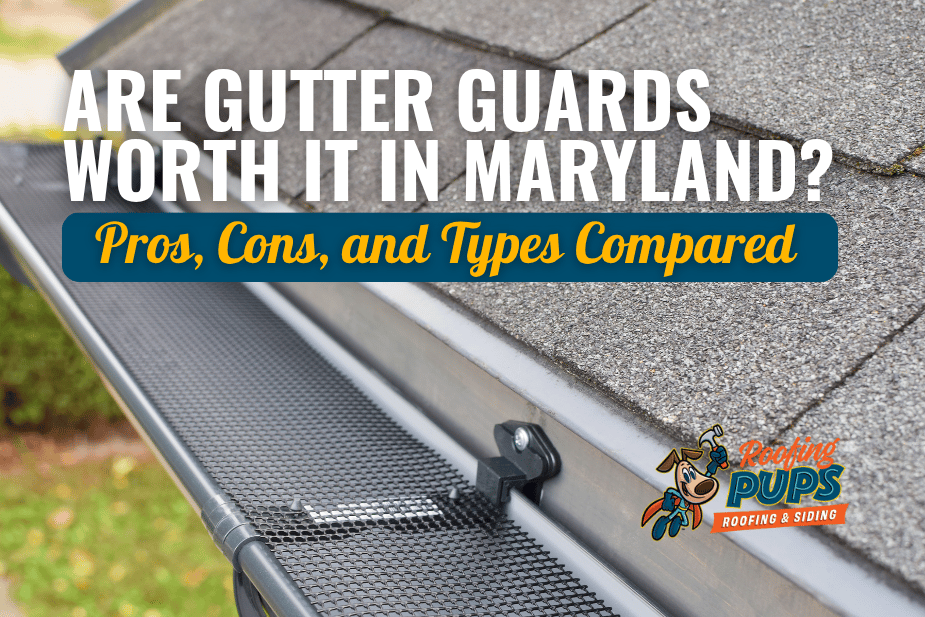
Every fall, Maryland homeowners watch the same thing happen. Oak leaves, maple seeds, and pine needles pile into the gutters, the next heavy rain spills over the edge, and someone ends up back on a ladder. Gutter guards promise to break that cycle, but are gutter guards worth it, or just another add-on?
This guide gives an honest look at how they perform in Maryland, the main types of gutter guards, the real trade-offs, and how to tell whether your home is a good fit.
Are Gutter Guards Worth It? The Short Answer for Maryland Homeowners
For most Maryland homes with mature trees nearby, yes, gutter guards are worth it. A quality guard cuts down on cleanings, keeps water flowing during heavy storms, and protects your fascia, siding, and foundation from overflow. They add less value to homes with few trees, and they are not a fix for gutters that are already sagging or leaking.
The value comes down to three things: how much debris your roof collects, the type of guard you choose, and whether it is installed correctly. A cheap guard installed poorly can clog faster than an open gutter. A well-matched system installed at the right pitch can keep your gutters working with little more than an occasional rinse.
Why Maryland Gutters Clog So Quickly
Maryland’s mix of hardwoods and evergreens gives gutters a year-round workload. Oaks and tulip poplars drop leaves in the fall, maples shed their winged seed pods in the spring, and pines drop needles all year. Add shingle granules and roof grit, and gutters in wooded neighborhoods can fill up in a single season.
Weather makes it worse. Summer thunderstorms can dump a lot of rain in a short time, and a partly clogged gutter overflows fast. In winter, trapped debris holds water that freezes, adding weight that pulls gutters away from the fascia. Wet leaves sitting along a shaded roof edge also hold moisture, which can encourage the moss and algae growth that shortens a roof’s life.
That is why homeowners in wooded parts of Anne Arundel County, Baltimore County, Howard County, and Montgomery County often find themselves cleaning gutters two or more times a year.
Types of Gutter Guards Compared
Not every gutter guard handles debris the same way. The best gutter guards Maryland homeowners can choose depend on what is falling on the roof. Here is how the four main types compare, and where each one fits.
Micro-Mesh Gutter Guards
Micro mesh gutter guards use a fine metal screen, often stainless steel, over an aluminum frame, with openings small enough to block pine needles, maple seeds, and shingle grit while letting rain pass through. They are the best gutter guards for pine needles and the most common choice for heavily wooded Maryland lots. Expect a higher upfront cost, and plan on professional gutter guard installation so the mesh sits at the right angle to shed debris.
Screen Gutter Guards
Screen guards are a budget-friendly step up from open gutters. They stop large leaves well, but their bigger openings let needles, seeds, and small twigs through, and some of that debris wedges into the screen itself. They work best on homes surrounded mostly by broad-leaf trees with light debris.
Reverse-Curve (Surface Tension) Gutter Guards
Reverse-curve guards cover the gutter with a solid hood. Rainwater follows the curved edge into a narrow slot while leaves slide off the front. They handle big leaf loads, but during intense summer downpours, water can shoot past the curve, and the slot can collect fine debris over time. They are also more visible from the street, which matters to some homeowners.
Brush and Foam Gutter Guards
Brush and foam guards sit inside the gutter channel. They are inexpensive and easy to install yourself, but they catch debris rather than shed it. Foam can break down in the sun and hold moisture, and brushes need to be pulled out and cleaned. They can make sense on a low-debris home, but they are rarely a long-term fix in tree-heavy neighborhoods.
Gutter Guard Pros and Cons
Before investing, it helps to weigh the gutter guard pros and cons against how your home actually drains.
Pros
- Fewer cleanings. Most homeowners go from several full cleanings a year to occasional maintenance.
- Better storm performance. Clear, flowing gutters handle heavy rain without spilling onto siding, windows, and landscaping.
- Protection for your home’s edge and foundation. Consistent drainage reduces rot along the fascia and soffit and keeps water away from your foundation and basement.
- Fewer pests. Guards keep out birds, rodents, and mosquitoes that nest in standing water and debris.
- Longer gutter life. Less weight from wet debris and ice means less sagging and fewer pulled hangers.
Cons
- Upfront cost. Quality systems cost more than a few years of professional cleaning.
- Not zero maintenance. Debris can sit on top of guards, and fine grit can still build up inside.
- Installation matters. The wrong pitch or a poor fit can cause overflow or leave gaps.
- Some styles can affect your roof. Guards that slide under the first row of shingles can lift or damage them.
When weighing gutter guards vs gutter cleaning, think long term. If you pay for cleaning twice a year and still deal with overflow, guards usually pay off over time. If you have very few trees and rarely see clogs, routine cleaning may be all you need.
How Much Do Gutter Guards Cost in Maryland?
What gutter guards cost depends on the system you choose and the layout of your home. The biggest factors are:
- Guard type and material. DIY foam and plastic screens are the least expensive, while professionally installed stainless steel micro-mesh sits at the top of the range.
- Linear footage. Pricing is usually based on feet of gutter, so larger homes and complex rooflines cost more.
- Roof height and pitch. Two- and three-story homes and steep roofs take more time and safety equipment.
- Gutter condition. Damaged, sagging, or undersized gutters may need work before guards go on.
- Add-ons. Downspout upgrades, corner pieces, and cleaning out existing gutters before installation all affect the total.
The most accurate way to price a system is an on-site assessment. Roofing Pups offers free estimates and 0% financing on qualifying projects, so you can protect your home without paying the full cost up front.
When to Repair or Replace Gutters Before Adding Guards
A gutter guard is only as good as the gutter underneath it. Putting guards on a failing system just hides the problem. Consider gutter repair or full gutter installation and replacement first if you notice:
- Sagging sections or gutters pulling away from the fascia
- Leaking seams, rust spots, or cracks
- Standing water in the gutter, or overflow, even when it is clean
- Peeling paint or soft, rotting wood behind the gutters
- Gutters that are too small for the amount of water your roof sheds
If your gutters are near the end of their life, replacing them with seamless aluminum gutters and adding guards at the same time is often the most cost-effective path. A professional roof inspection can also catch related issues, like damaged drip edge or flashing, that affect how water leaves your roof. After a major storm, check your gutters for storm damage as well.
Frequently Asked Questions About Gutter Guards
Are gutter guards worth the money?
Yes, for most Maryland homes surrounded by trees. Gutter guards reduce cleanings, prevent overflow during heavy rain, and help protect fascia, siding, and foundations. Homes with few trees and gutters that rarely clog may get less value from them.
What type of gutter guard works best for Maryland homes?
Micro-mesh gutter guards are usually the best fit for Maryland homes. Their fine mesh blocks the pine needles, maple seeds, and oak leaves common across the state while still handling heavy summer rain.
Do gutter guards work with pine needles and maple seeds?
Micro-mesh guards do. Screens and many reverse-curve guards let needles and seeds slip through or wedge into openings. If pines or maples hang over your roof, choose a fine mesh system.
Do gutter guards prevent ice dams?
No. Ice dams form when heat escaping through the roof melts snow that refreezes at the colder roof edge. Gutter guards keep gutters clear so meltwater can drain, but preventing ice dams takes proper attic insulation and ventilation. Our winter roof preparation guide covers the steps.
Do you still need to clean gutters if you have gutter guards?
Yes, but far less often. Most guards need an occasional inspection and a quick brush or rinse to clear debris sitting on top, instead of full cleanings several times a year.
Can gutter guards be installed on existing gutters?
Yes, as long as the existing gutters are in good shape. Guards should go on gutters that are securely attached, properly sloped, and free of leaks. If your gutters are sagging or damaged, repair or replace them first.
Will gutter guards damage my roof or shingles?
Not when they are installed correctly. Some guard styles slide under the first row of shingles, which can lift or crack them and may affect a manufacturer warranty. Systems that attach to the gutter lip or fascia avoid touching the shingles.
How long do gutter guards last?
It depends on the material. Foam, brush, and plastic guards typically wear out within a few years, while quality stainless steel or aluminum micro-mesh systems can last as long as the gutters themselves.
Get Gutter Guards Installed by Roofing Pups
If you are tired of clearing leaves and watching your gutters overflow every storm, Roofing Pups can help you choose the right gutter guards for your home and the trees around it. We install and service gutter systems across Anne Arundel, Baltimore, Harford, Howard, and Montgomery counties. Get an instant estimate or book online to schedule your free assessment.