If you’ve walked around your house and your shingles look fine — no cracks, no missing pieces, nothing obviously wrong — but you’re still finding water stains inside, you’re not imagining things. Roof leaks even when shingles look fine are one of the most common calls Roofing Pups get from homeowners across Maryland and Virginia. The shingles are only the outermost layer of your roofing system, and a leak can start well before it ever shows up on the surface.
Why Shingles Aren’t the Whole Story
A roof isn’t just shingles nailed to plywood. It’s a layered system: decking, underlayment, flashing, ventilation, and drainage all working together. Shingles handle sun, rain, and wind on the surface, but the layers underneath are what actually keep water out of your home.
When people ask about the causes of roof leaks, they’re often surprised to learn the shingles are rarely the real problem. More often, the issue is happening in a seam, a joint, or a gap that isn’t visible unless someone climbs up and looks closely.
Common Hidden Causes of Roof Leaks
Most hidden roof leak causes fall into a handful of categories. Here’s what we find most often on inspections around Maryland and Virginia homes.
Flashing Failures Around Chimneys, Vents, and Skylights
Flashing is the thin metal barrier installed anywhere your roof meets a vertical surface — chimneys, skylights, plumbing vents, and dormer walls. It’s sealed, not nailed solid, which means it can shift, corrode, or separate over time.
A roof flashing leak is one of the sneakiest problems out there because the shingles around it can look completely untouched while water is finding its way in underneath. High winds and hail from a bad storm can loosen flashing faster than normal wear, which is one reason storm damage often shows up as a leak long before anyone notices a shingle out of place.
Damaged or Aging Underlayment
Underneath every shingle is a water-resistant underlayment layer. It’s your roof’s backup plan if a shingle ever fails. But underlayment breaks down with age, especially in homes that have gone through several Mid-Atlantic winters. Once it’s compromised, water can travel sideways along the decking before it ever shows up as a ceiling stain, often far from where the leak actually started.
Nail Pops and Improper Fastening
Shingles are only as good as the nails holding them down. If a roofer used the wrong nail length, placed nails too high, or the deck has shifted slightly over time, nails can “pop” up just enough to create a tiny gap. From the ground, or even from a ladder, this is nearly impossible to see, and it usually calls for a targeted roof repair rather than a full replacement.
Clogged or Failing Gutters
Gutters aren’t just for curb appeal — they manage where water goes once it leaves your roof. When gutters clog with leaves and debris, water backs up under the roof edge instead of draining away, which can rot fascia boards and force water up under the first course of shingles. Routine gutter repair, or adding gutter guards to keep debris out in the first place, goes a long way toward preventing this type of leak.
Ice Dams and Attic Ventilation Issues
Poor attic airflow is one of the more overlooked causes of roof leaks in our region. When warm air escapes into an under-ventilated attic, it melts snow on the upper roof, which refreezes at the colder eaves and forms an ice dam. Water then backs up under the shingles instead of running off. An attic ventilation roof leak like this can happen even on a roof that’s only a few years old, and it has nothing to do with shingle quality.
Fascia and Soffit Deterioration
Your fascia and soffit protect the edges of your roofline and allow your attic to breathe. When they rot or pull away, they open a path for water and pests, and they compromise the ventilation your roof depends on to stay dry.
Why a Visual Check From the Ground Isn’t Enough
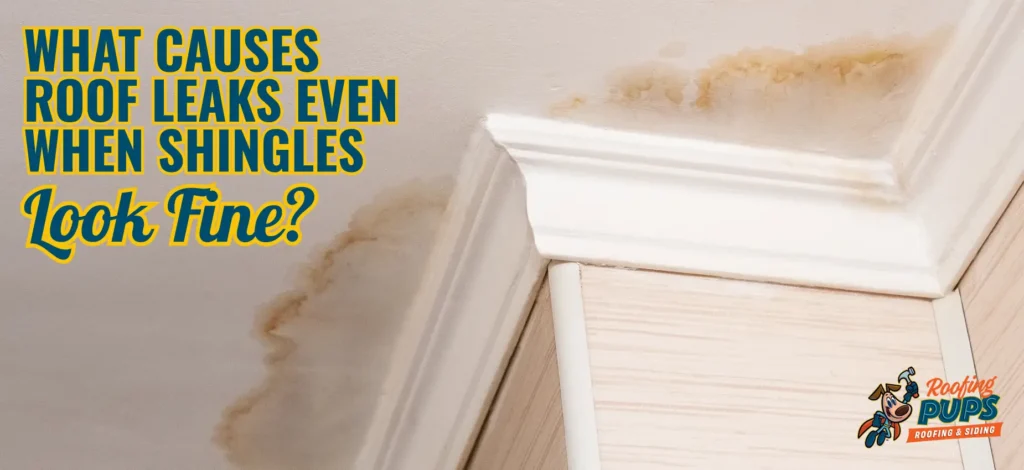
Because of where these issues hide, a roof leak without damaged shingles is actually the norm, not the exception. The signs of a hidden roof leak are usually indoors, not on the roof: a faint water stain on a ceiling, a musty smell in the attic, peeling paint near an exterior wall, or a slightly soft spot underfoot near an upstairs window.
By the time any of these show up, water has often been getting in for weeks or months, which is exactly why a professional roof inspection matters more than a quick look from the driveway.
How Roofing Pups Find Leaks Before They Become Bigger Problems
Our team checks flashing, underlayment, ventilation, and fastening — not just the shingles on top — so we can find a problem while it’s still a quick fix. When a roof has reached the point where patching isn’t enough, we’ll walk you through replacement options, including GAF shingles and other manufacturer-backed materials, so your new roof holds up better than the one it’s replacing. Homeowners dealing with older or mismatched roofing can also ask us about shingle repair and installation for a more targeted fix.
FAQs About Roof Leaks
Can a roof leak even if the shingles aren’t damaged?
Yes. Most leaks start in flashing, underlayment, or ventilation — components that sit beneath or around the shingles rather than the shingles themselves.
What is the most common hidden cause of roof leaks?
Flashing failures around chimneys, vents, and skylights are among the most frequent causes we find, along with aging underlayment and clogged gutters.
How do I know if my roof is leaking if I can’t see any damage?
Watch for ceiling stains, musty attic odors, peeling exterior paint, or soft spots near upstairs windows. These indoor signs often appear before any exterior damage is visible.
How often should I get a roof inspection?
Most homes benefit from an annual inspection, plus a follow-up after any major storm with high winds or hail.